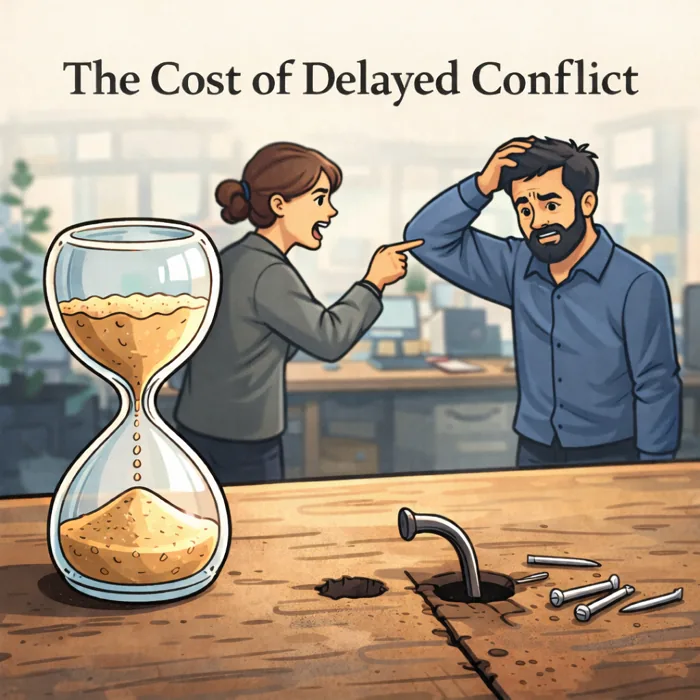
How I've learned to approach conflict
I'm not the kind of manager who enjoys conflict. My default is to look for common ground and work my way through disagreement rather than confront it directly.
Over the years, I've been exposed to many forms of conflict, but the ones that stand out most are conflicts of opinion and conflicts of personality. Those usually start small and reasonable, then become harder to manage when left unaddressed.
When criticism is about my own work, I can usually absorb it. My first instinct is to reflect, adjust, and look for a better way forward.
Where I've learned I'm weaker is in saying things early when tension starts building. Instead of naming disagreement right away, I sometimes let frustration accumulate.
When issues are left unspoken
When I do that, the reaction, when it finally comes, is rarely proportional to the trigger. It's often about everything that came before it. The conversation shifts away from the work and toward the relationship itself, which makes it harder to recover from.
With more distance, I've realized that many of these situations could have been avoided. Not necessarily by changing the work, but by creating space for people to speak early. Boring or repetitive tasks happen. Constraints exist. But there are usually ways to acknowledge frustration, rebalance effort, or at least make people feel heard before resentment sets in.
One thing I've learned is that apologies don't fully reset a relationship. They matter, but they don't erase the impact. Even when people continue working together professionally, something can remain broken underneath. How conflict is handled shapes whether trust survives afterward.
From individual tension to team risk
Over time, I realized this pattern wasn't limited to how I personally experience conflict. I've seen the same dynamic play out between people, with much higher consequences.
In one situation, two experienced developers had long-standing differences in how they approached their work. On their own, those differences weren't a problem. Divergent opinions are normal, and often healthy.
The issue was that the tension between them had been present for a long time and had never really been resolved. By the time they were required to work closely together, the conflict was no longer about the work itself. Feedback turned into criticism. Disagreements turned into personal judgments. What could have been addressed early as a professional disagreement had hardened into something personal.
Why Early Conflict Handling Matters
At that point, the cost extended beyond the two individuals. Meetings became tense. Others were affected, either by feeling forced to take sides or by disengaging to avoid the discomfort.
The situation started shaping the team's dynamics in ways that were hard to ignore. Eventually, intervention became unavoidable. The outcome stabilized the team, but the cost of letting the situation reach that point was clear.
What I take away from these experiences is fairly simple. Conflict doesn't age well. The longer it sits, the harder it becomes to resolve, and the more personal it gets.
As a leader, it's tempting to delay hard conversations, especially when the people involved are competent and valuable. But avoiding those conversations doesn't protect the team. It just postpones the damage. Addressing conflict early is uncomfortable. Letting it fester is worse.
- Patrick